
Struggling to import, store and sell products in China without a local entity?
PTL Group provides full 4PL logistics services in China, combining importation, customs compliance, warehousing and distribution with financial and regulatory support. As your Importer of Record (IOR), PTL can import, store and sell your products using our licenses and facilities, even if your company does not have a legal entity in China. As a trusted logistics company in China, our solutions also include RMB invoicing, sales contracts, payment collection from local customers and overseas fund transfers, allowing international companies to navigate logistics in China with full compliance and financial transparency.
Our 4PL Logistics Services – Your Peace of Mind:
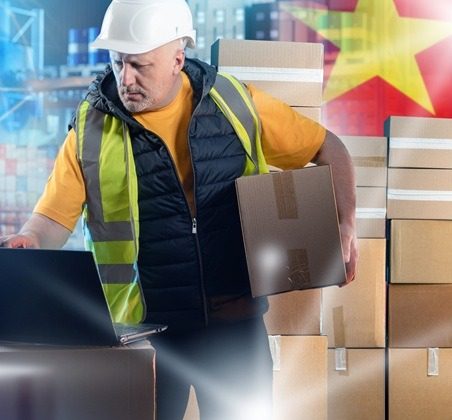
Import and Export Services in China
Manage cross-border trade in China
Warehousing Service in China
Store and manage inventory across China
Distribution in China
Maintain control over your sales operations in China
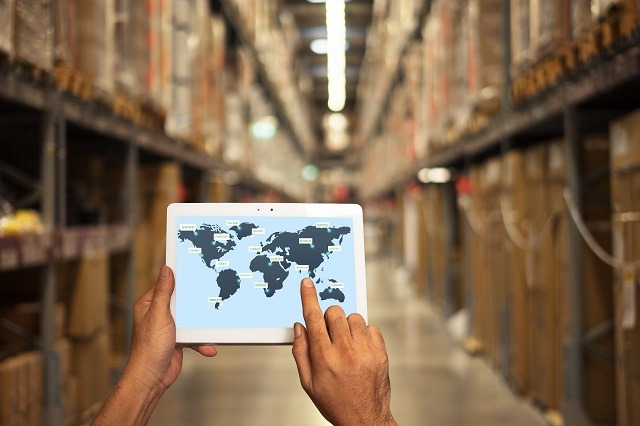
China Fulfillment Agent
Support sourcing and order fulfillment in China
The 4PL Advantage: Full-Scope Logistics & Financial Compliance
Our 4PL Logistics Services provide you with peace of mind by managing the complexities of the Chinese market. We differentiate ourselves from traditional 3PLs by acting not only as your “Importer of Record” but also managing your entire supply chain.
Logistics & Customs Execution
- Import/Export Analysis: HS code evaluation, import quota, license requirements, and inspection assessment.
- Warehousing: Full management of China logistics centers and inventory.
- Compliance Assessment: Handling customs restrictions, national standards, and market entry license applications.
- Specialized Logistics: Coordinating product transfers for roadshows and exhibitions (including ATA Carnet).
- Returns Management: Goods returned to vendor/HQ and RMA management.
Need logistics support for an upcoming trade show? Explore our China Exhibition Support services for exhibition-goods transportation, temporary importation, storage, and venue delivery.
Financial Management & Operational Oversight
- RMB Transactions: Sales contract signing, credit control, and RMB invoicing.
- Fund Collection: Collection of payments from local clients and management of overseas transfers.
- VAT Management: Import and export VAT refund management to optimize costs.
- Purchasing & Sales: Local purchasing from suppliers combined with sales to clients in China or overseas.
- Performance Review: Oversight of vendor performance, including transportation and cargo insurance.
- Global Finance Coordination: Aligning China operational requirements with the accounting and reporting standards of international HQ finance teams.
Our Step-by-Step 4PL Logistics Process in China
- Compliance & Analysis: HS code evaluation, license requirements, and inspection assessment.
- Importer of Record Services: Acting as your agent to import and sell products using our licenses.
- Shipment & Customs: Handling the importation, customs clearance, and VAT refund optimization.
- Warehousing & Stock: Receiving goods into centers (Bonded/Front) with full ERP integration.
- Order Fulfillment: Professional Pick & Pack and client delivery preparation.
- Financial Closing: Issuing RMB invoices, collecting local payments, handling overseas transfers, and aligning financial records with international accounting standards.
Practical Experience from Client Projects
Case Study 1: Export Compliance and Logistics Services in China
A sourcing company working with manufacturers in China needed a compliant export structure after the 2025 regulatory reform changed how exports could be handled. PTL Group provided the licensed framework, supporting RMB purchasing, VAT invoicing, and shipment coordination as part of its logistics services in China.
Case Study 2: Local Logistics and Distribution Services in China
A European industrial company needed a practical way to source products locally and support local sales in China without establishing its own entity. PTL Group helped protect the client’s supplier relationships and commercial confidentiality, while providing a compliant local structure of logistics and distribution services, covering purchasing, invoicing, and sales.
👉🏼 Read the full case studies on our Case Studies page.
Strategic Warehousing in China: When will you need it, and which warehouse should you choose?
In case you do not have an immediate client for your products, or your client is not able to accept and store your products, you may want to consider setting up a warehouse in China to support inventory, your online shop and e-commerce platform sales. This solution applies to sales within China and is not intended for cross-border e-commerce operations.
PTL Group’s 4PL Fulfillment Services provide comprehensive logistics and distribution services in China, from specialized warehousing to full financial compliance. Several types of warehousing are available – based on your needs:
- Bonded Warehousing: As your trusted logistics partner, we secure suitable space in Free Trade Zones and supervise all aspects of stock management and compliance. This allows you to keep your goods close to the China market, while postponing importation costs (VAT, duty, etc.).
- Front Warehousing: Goods are sent from customs directly to our front warehouses. Our dedicated team manages the stock, integrates with your ERP system if required, and provides regular stock counts and periodical reports. This allows you to maintain stock for immediate shipping to your clients or manage a spare parts inventory that caters to your clients’ immediate needs.
- Cross-border warehouse: A warehouse that carries the appropriate license and specializes in cross-border activity that involves selling products in small quantities to end users. Relevant for cross-border e-commerce China logistics.
- E-commerce warehouse: A warehouse that specializes in e-commerce activity, carries the relevant licenses and can connect and interface with various e-commerce and payment platforms. For in-China sales only.
In addition, we handle the intricacies of local distribution, ensuring your products reach their destination securely and on time.
Q&A about Logistics in China
What is Third-Party Logistics (3PL)?
Outsourcing logistics activities to a specialized company that provides services such as transportation, warehousing, and distribution. 3PL providers offer expertise, infrastructure, and technology to manage various aspects of the supply chain on behalf of the client.
Businesses leverage 3PL services to reduce costs, improve flexibility, access specialized capabilities, and focus on core competencies.
What is 4PL and how does it optimize logistics services in China?
An advanced form of logistics outsourcing in which a single provider manages and coordinates multiple logistics partners to deliver end-to-end supply chain solutions. A 4PL provider acts as a strategic partner, effectively operating as an extension of your organization to optimize the entire supply chain locally rather than functioning as a traditional service provider. Services typically include strategic planning, network design, performance monitoring, and continuous improvement.
What is an ATA Carnet and how is it used for logistics in China?
An international customs document that allows the temporary importation of goods for exhibitions, trade shows, or professional purposes without paying import duties or taxes. ATA Carnet simplifies customs procedures and facilitates the temporary movement of goods across multiple countries.
What is a CCC (China Compulsory Certificate) for imported products?
A mandatory certification system implemented by China to ensure that products imported or sold in the Chinese market comply with specified safety, quality, and environmental protection standards. The CCC mark is required for a wide range of products, including electrical and electronic devices, automotive parts, toys, and medical devices.
Which main ports are utilized for commercial logistics in China?
China has a vast coastline and numerous ports, both on its mainland and offshore islands. Some of the main ports in China include:
- Shanghai: The Port of Shanghai is the world’s busiest container port, handling over 43 million TEUs (twenty-foot equivalent units) of cargo annually.
- Shenzhen: The Port of Shenzhen is the fourth-busiest container port in the world, handling over 25 million TEUs of cargo annually. It is also a major gateway for trade between China and Hong Kong.
- Ningbo-Zhoushan: The Port of Ningbo-Zhoushan is the third-busiest container port in the world, handling over 27 million TEUs of cargo annually. It is located on China’s east coast, south of Shanghai.
- Qingdao: The Port of Qingdao is located on China’s northeast coast and handles over 19 million TEUs of cargo annually. It is a major gateway for trade between China and Japan, South Korea, and other countries in the region.
- Tianjin: The Port of Tianjin is located on China’s northern coast and handles over 16 million TEUs of cargo annually. It is a major gateway for trade between China and northern Asia.
- Guangzhou: The Port of Guangzhou is located on China’s southern coast and handles over 18 million TEUs of cargo annually. It is a major gateway for trade between China and Southeast Asia.
- Read more about the most important ports for logistics in China.
What is an HS code and how does a logistics company in China evaluate it?
The Harmonized System (HS) code is an internationally recognized system of numbers and names used to classify traded products. It is a standardized system of names and numbers used to identify products in international trade. HS codes are used to identify the products being imported or exported and determine the applicable taxes and duties. The HS code is used by the Chinese customs officials to determine the tariff, or tax, that will be charged on imported goods.
More information on logistics & distribution in China
