The World Artificial Intelligence Conference (WAIC) in Shanghai offers a vivid picture of how exhibitions in China are evolving. This year’s edition ran from July 17 to 20, with over 1,100 exhibitors on the floor. For the first time since WAIC launched in 2018, President Xi Jinping delivered the opening keynote in person – a sign of how much weight this event now carries.
Robots prepared drinks, folded clothes, packed boxes, and interacted with visitors throughout the halls. But the most useful lessons from WAIC extend far beyond artificial intelligence. For international B2B companies, WAIC shows that a successful exhibition presence depends on more than an impressive product. It takes a clear story, local relevance, active visitor engagement, and a practical process for turning interest into business.
The Six Lessons Ahead:
- Tell a Story Visitors Will Remember
- Demonstrate the Product in Action
- Invite Visitors to Participate
- Use Playfulness with Purpose
- Localize with Cultural Awareness
- Share Expertise as Well as Products
Final thoughts: Turning Exhibition Attention into Business
.
1. Tell a Story Visitors Will Remember
Technical specifications matter, especially in a detailed sales conversation. But at a busy exhibition, they rarely catches the eye. A visitor needs a reason to stop first, the numbers can come later.
The most effective booths at WAIC showed products in context. Humanoids cooked, folded laundry, picked toys off the floor, and even performed the delicate task of piping sugar candy. One booth had two robots playing a live piano duet. Each demonstration told a small story: how technology could change a person’s day, a workplace, or a business.
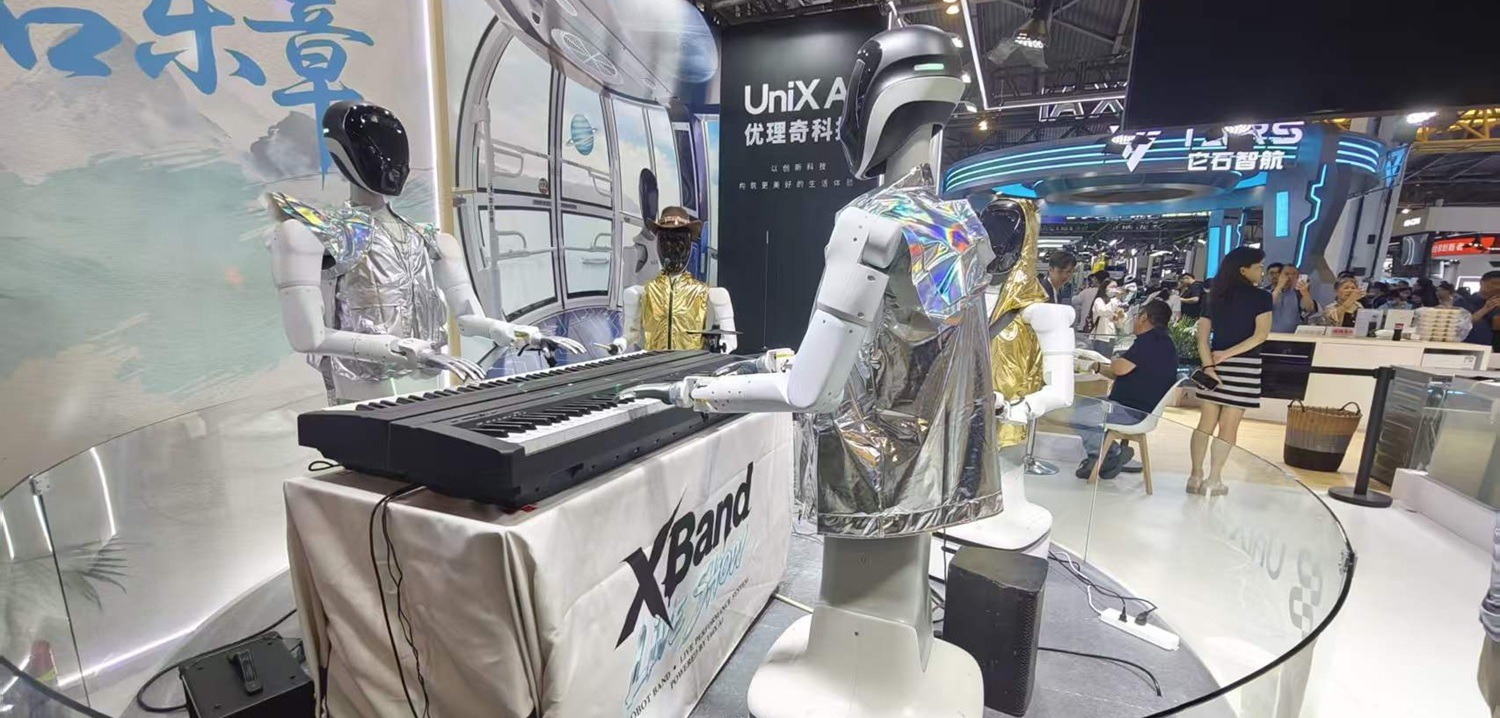 A robot duo performing live at an “XBand” show booth — an unmistakable draw on a floor full of near-identical displays.
International exhibitors can apply the same principle without a single robot: show the problem your product solves, the operational improvement it creates, or the experience it changes. A focused story gives visitors an immediate reason to stop and ask questions. Its absence shows, too — one high-end components supplier had an elegant, beautifully lit booth with orchid displays and premium finishes, and almost no one standing in it.
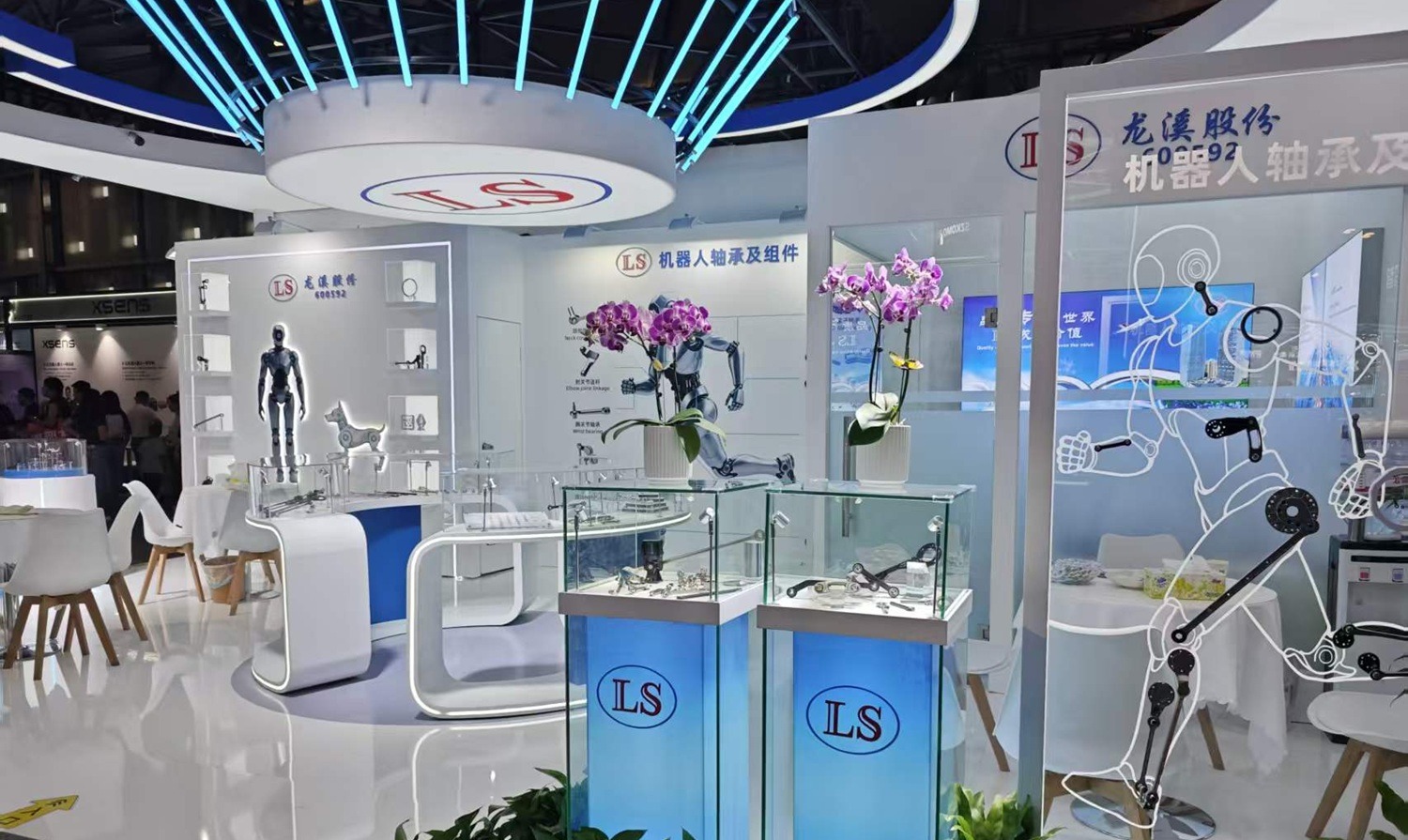 Impressive to look at, but empty of visitors — a booth with polish but no story to pull people in.
2. Demonstrate the Product in Action
A static display leaves much of a product’s value unexplained. Live demonstrations let visitors see how something works, understand its applications, and picture using it in their own organization.
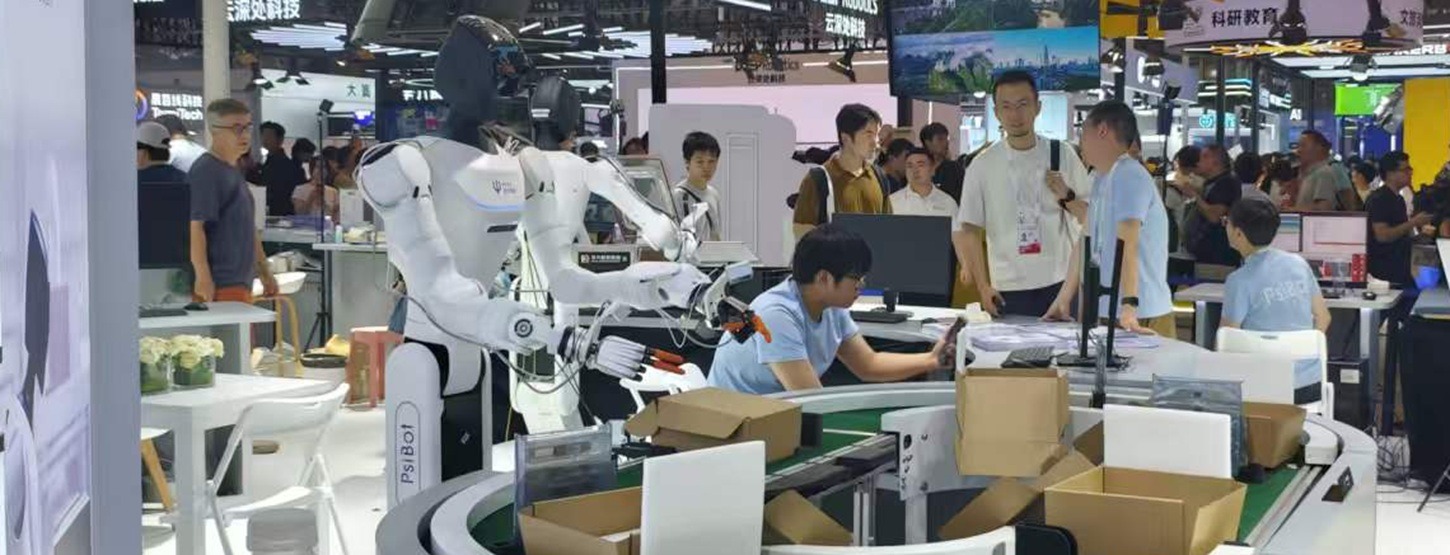 A robotic arm sorting packages on a rotating conveyor drew a steady crowd of onlookers throughout the day — the kind of ongoing, visible demonstration a static display can’t match.
This approach also creates natural openings for sales conversations. Demonstrations can run on a schedule throughout the day, be presented by bilingual staff, get recorded for social media, or end with a small giveaway produced by the equipment itself.
3. Invite Visitors to Participate
Many of the most memorable exhibits at WAIC treated visitors as participants rather than spectators. Interactive games, robot-made drinks, rotating displays, talks, and hands-on demonstrations attracted attention and kept people there longer.
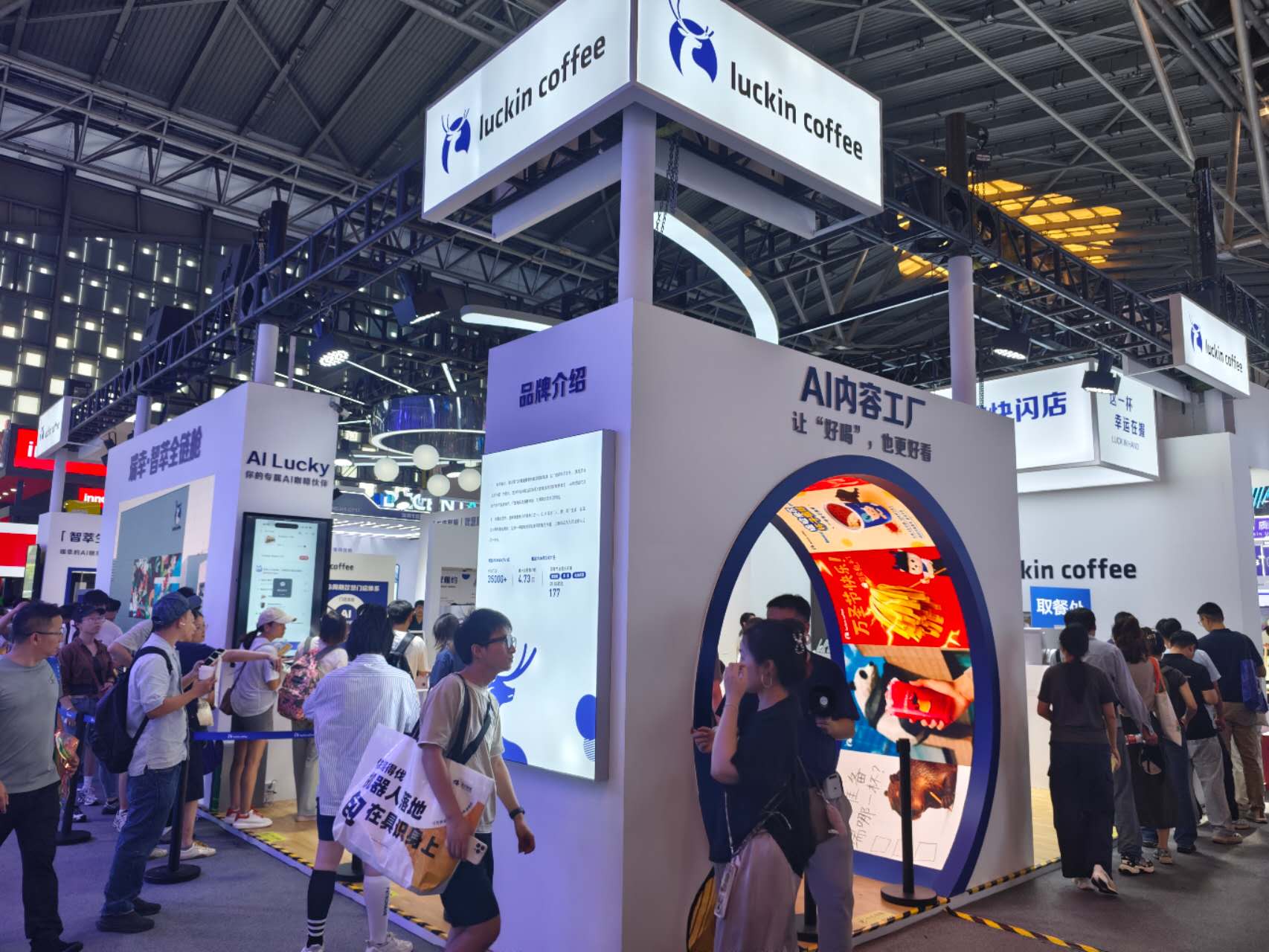 Luckin Coffee had visitors line up to get their drink made by a robot barista, through a hobbit-like entrance — the queue was already forming before this photo was taken.
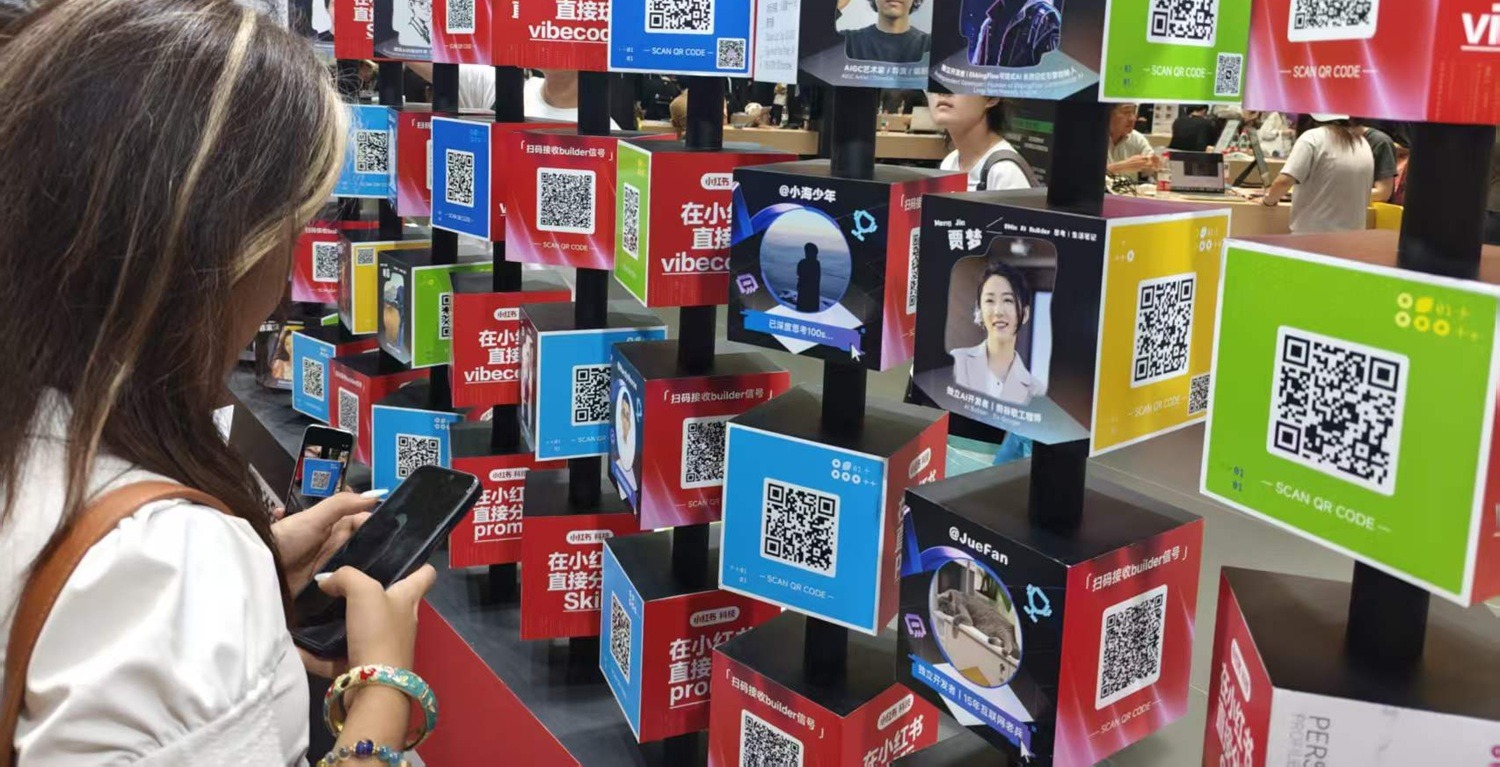 One of the more inventive setups on the floor: a wall of rotating boxes introducing AI agents, games, and ideas from independent inventors and small companies alongside the major exhibitors.
Engagement should still support a commercial goal. A game can introduce a product benefit. A demonstration can lead into consultation. A QR code can connect a visitor directly to a WeChat account, Mini Program, or sales representative.
Planning these connections in advance is essential. PTL Group helps international exhibitors combine booth activity with localized digital campaigns, WeChat tools, bilingual visitor engagement, and structured lead capture, creating a continuous path from pre-event outreach to post-event follow-up.
Read more about our Online & Offline Exhibition Support
4. Use Playfulness with Purpose
Mascots and playful visual elements are common in China, including among major technology and e-commerce companies – Ant Group, Tencent, and JD.com all lean on one. For Chinese consumers, seeing the mascot is sometimes more meaningful than seeing the company name, and merchandise featuring it sells well on its own.
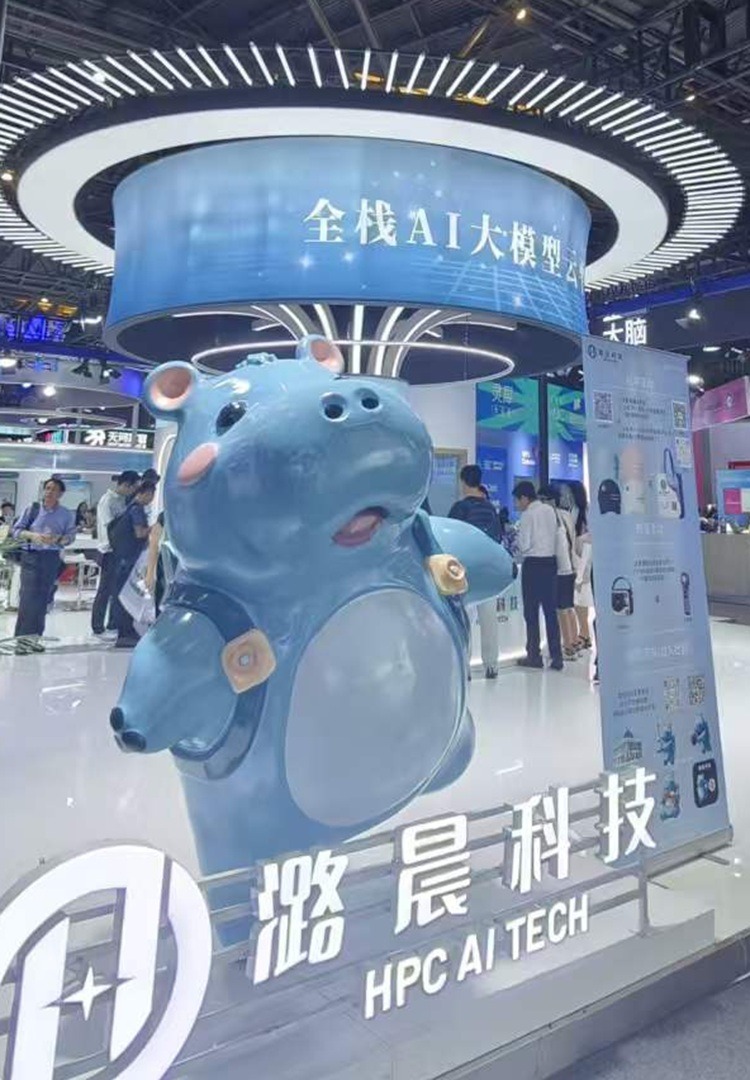 A mascot-driven display at WAIC — the kind of playful branding that’s mainstream in China, even among serious technology firms..
This is less common in other countries, and some business people see it as unrelated to a serious B2B brand. It is still worth a second thought. For an international company, the concept needs to fit the brand and its audience – done well, it builds familiarity without undercutting a professional identity.
5. Localize with Cultural Awareness
Localization is more than translating brochures into Chinese. Booth design, imagery, messaging, demonstrations, and visitor interaction should all reflect local business expectations.
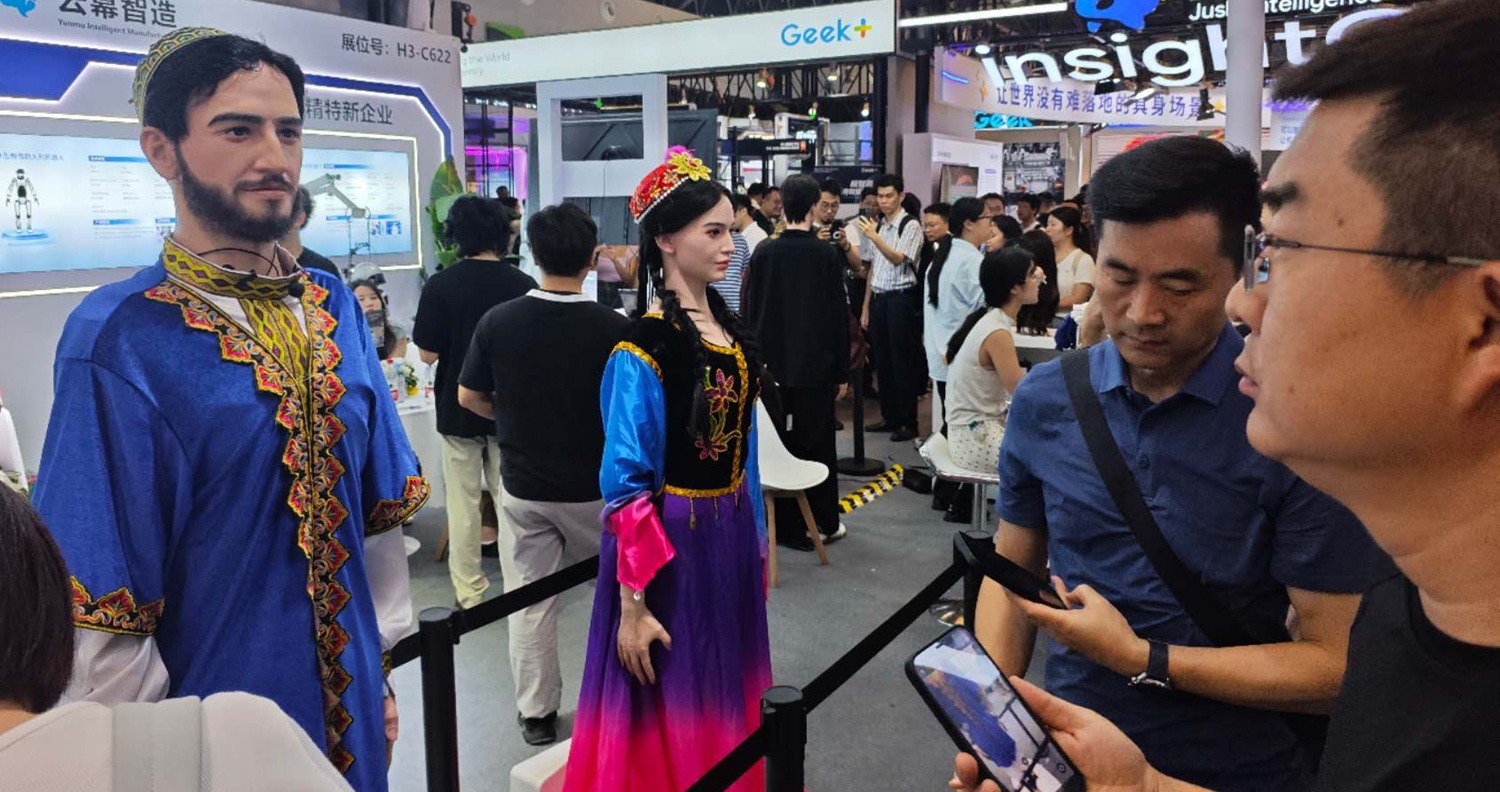 Humanoid figures dressed in the traditional clothing of a northwestern Chinese ethnic minority group, at a booth aimed partly at international investors – a cultural reference that plays very differently for a domestic audience than for a global one.
This kind of reference worked at WAIC because the exhibiting companies were Chinese and so was most of the audience. A foreign-owned company selling into China should be considerably more careful about how far it takes a cultural reference. Dolce & Gabbana’s missteps in China a few years ago are a widely cited example of localization gone wrong. A cultural reference can build credibility when it’s accurate and clearly relevant or undercut it when it feels superficial. Local specialists are worth involving before an idea reaches the exhibition floor, not after.
PTL Group’s China-based marketing and exhibition teams work with international companies to adapt booth concepts, messaging, digital materials, and visitor communication to the local business environment.
Read more about our B2B marketing localization in China
6. Share Expertise as Well as Products
Speaking opportunities extend an exhibitor’s influence well beyond the booth. WAIC’s own program, built around keynotes, forums, and high-profile panels, is a reminder of how much weight a conference stage carries in China. The same logic applies at a smaller scale to any exhibitor.
Companies can apply for conference sessions, host short talks at their own booth, invite a client to share their experience, organize a round table, or livestream a Q&A on WeChat. None of it requires a keynote slot, it requires asking and having a plan.
These activities position a company within the professional conversation around the event, and they create reusable content – recordings, quotes, clips – for communication after the event ends. It also attracts media channels’ attention.
Turning Exhibition Attention into Business
Turning these ideas into an effective exhibition presence requires coordination across several local functions. PTL Group supports international B2B companies throughout the full exhibition cycle in China.
Before the event, our teams can coordinate booth planning, local suppliers, exhibition-goods logistics, temporary admission for eligible equipment and samples, localized digital marketing, prospect outreach, and advance meeting schedules.
During the exhibition, we can hire bilingual booth staff, visitor reception, provide translation, product-demonstration support, meeting coordination, WeChat integration, and structured digital lead capture. This support is also available when an international company requires local brand representation because its overseas team cannot attend.
The commercial process continues after the exhibition. When a Chinese buyer is ready to proceed, a transaction may require a local RMB contract, payment collection in China, a compliant Fapiao invoice, and domestic delivery. For eligible transactions, PTL Group’s local trading entities can support these steps and transfer the funds overseas under the applicable contractual and regulatory framework.
WAIC shows how creativity can attract an audience. Coordinated local execution helps turn that attention into business relationships, structured follow-up, and viable sales opportunities in China.
Planning to Exhibit in China?
Explore PTL Group’s Online & Offline Exhibition Support and learn how our local teams can support your exhibition planning, on-site presence, lead management, and commercial follow-up.